
How Grease Buildup Led to a $100,000 California Restaurant Fire
A real 2023 Arcata, CA restaurant fire caused by grease buildup in the exhaust system — and five practical lessons every restaurant owner can take from it.
The Incident
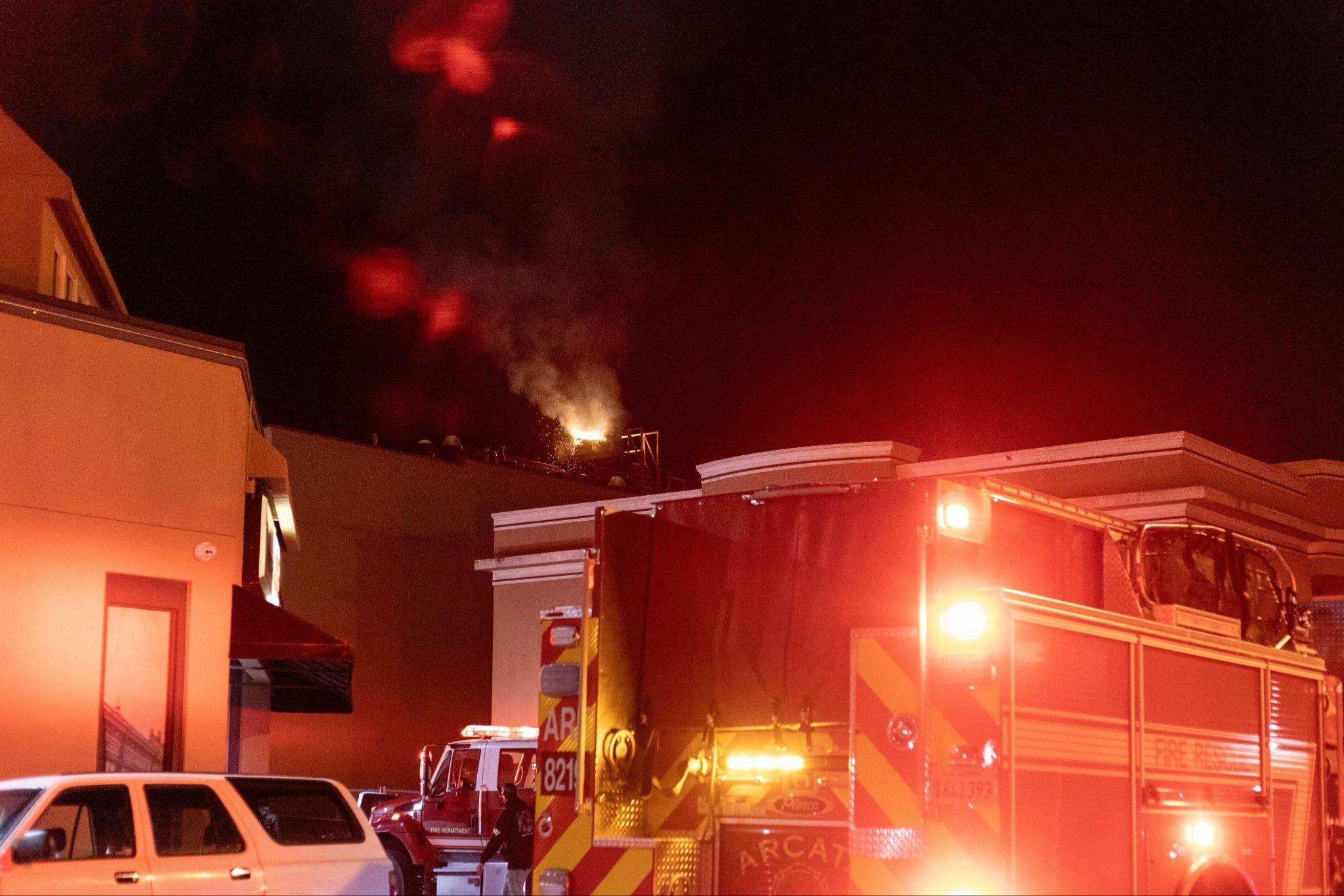
In the early morning hours of May 4, 2023, firefighters responded to reports of smoke and flames coming from a restaurant in Arcata, California.
Upon arrival, crews discovered flames extending through the building's rooftop ventilation system. Although the restaurant's automatic fire suppression system activated and slowed the fire, flames had already spread into portions of the roof structure before firefighters fully extinguished the blaze.
Following their investigation, officials determined that grease accumulation inside the commercial kitchen exhaust system was responsible for the fire. Fortunately, no one was injured — but the restaurant still suffered approximately $100,000 in damage, demonstrating that even relatively contained kitchen fires can have major financial consequences.
Why This Fire Matters
Many restaurant fires begin with perfectly ordinary cooking operations — a brief flare-up on a grill, a burner left unattended, an overheated fryer. By themselves, these incidents are often manageable.
The real danger begins when flames reach accumulated grease inside the exhaust system. Once grease inside these components ignites, the fire can travel vertically into concealed spaces and eventually the roof itself. That's exactly why commercial kitchen exhaust systems require routine professional cleaning — not simply to improve appearance, but to reduce fuel available for a fire.
Instead of stopping at the cooking surface, an ignited system gives fire an uninterrupted path through:
- —Hood filters
- —Hood plenum
- —Grease duct
- —Rooftop exhaust fan
Understanding How Grease Builds Up
Most restaurant owners regularly wipe down visible kitchen surfaces. The challenge is that the exhaust system is designed to capture grease-laden vapors before they enter the dining room.
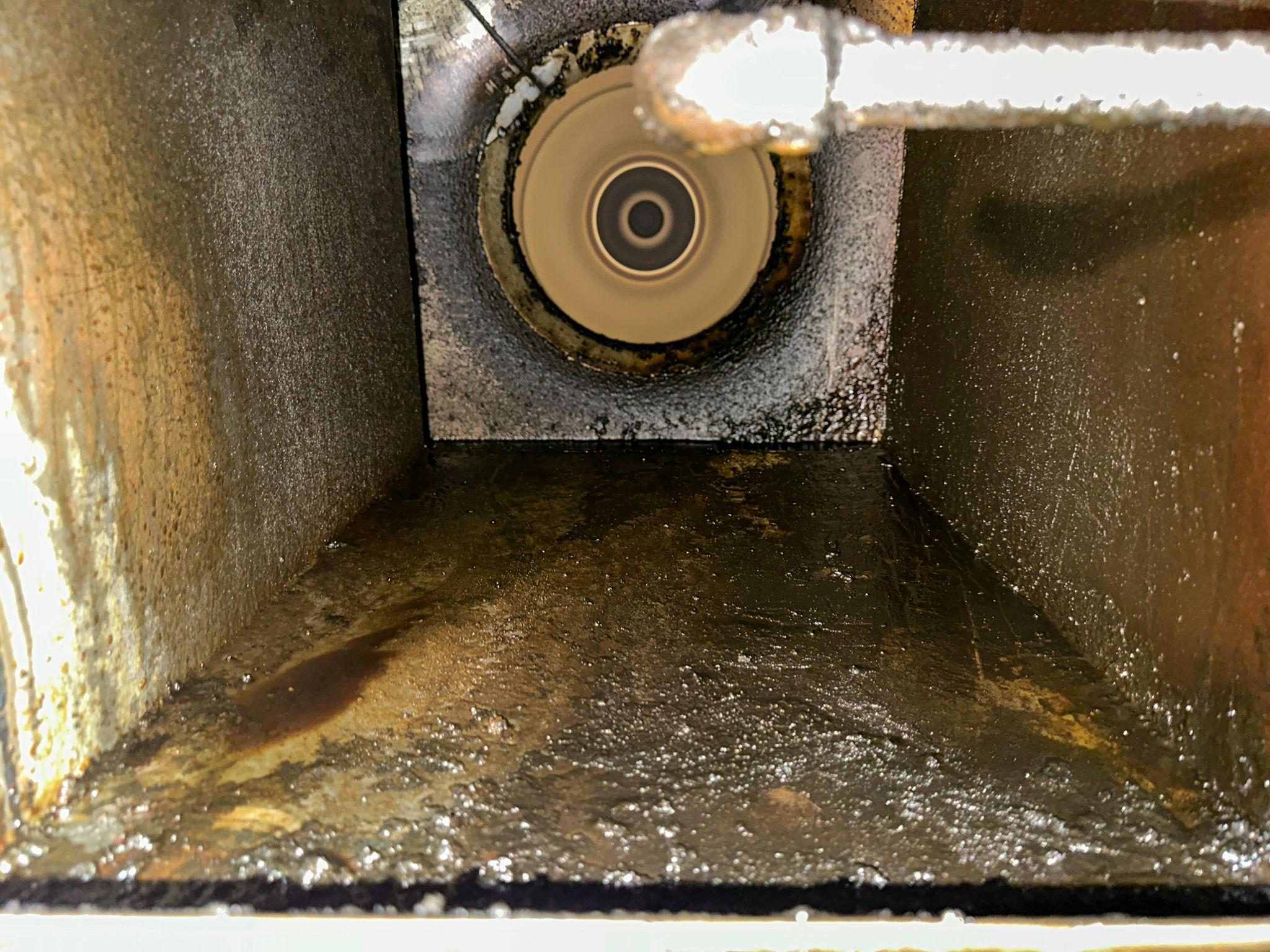
As hot cooking vapors cool, tiny grease particles condense onto metal surfaces inside the system — day after day, week after week, month after month. Eventually, that thin film becomes a thick layer of combustible grease coating areas that employees rarely inspect.
The greatest accumulation often occurs in places customers — and even restaurant staff — never see, and by the time grease becomes visible from the kitchen floor, substantial buildup may already exist elsewhere in the system:
- —Inside vertical grease ducts
- —Behind hood filters
- —Around fan housings
- —On rooftop exhaust fans
“We Already Have a Fire Suppression System.”
This is one of the most common statements we hear — and it's good news. Every commercial kitchen should have a properly maintained suppression system. But suppression systems and hood cleaning serve different purposes: a suppression system reacts after a fire begins, while professional hood cleaning helps reduce one of the primary fuels that allows that fire to spread.
The Arcata fire illustrates this perfectly. The suppression system activated exactly as designed — firefighters still encountered flames extending through the ventilation system because grease accumulation had already created a combustible pathway. Restaurants need both — think of it this way:
- —Fire suppression helps control emergencies.
- —Professional hood cleaning helps prevent them from becoming catastrophic.
Five Lessons Every Restaurant Owner Can Learn
The Arcata fire offers five practical takeaways for any commercial kitchen.
- —Most fire hazards are hidden. The clean stainless steel your customers see tells only part of the story — the highest-risk grease accumulation is often hidden above ceilings, inside ductwork, and on rooftop equipment.
- —Waiting until the hood “looks dirty” is too late. Grease accumulation develops gradually, and a system may appear relatively clean from the kitchen while significant deposits exist elsewhere. Professional inspections help identify these hidden hazards before they become dangerous.
- —Rooftop exhaust fans need attention too. Grease doesn't stop at the hood — it continues traveling upward through the exhaust system until it reaches the fan. Proper cleaning includes the entire exhaust system, not just what's visible inside the kitchen.
- —Small fires create big problems. Even when firefighters quickly extinguish a fire, restaurants often face temporary closure, lost revenue, insurance claims, smoke remediation, equipment replacement, scheduling disruptions, and inspection delays before reopening.
- —Preventative maintenance is almost always less expensive than recovery. Routine commercial kitchen hood cleaning is one of the simplest ways to reduce long-term fire risk — it's an investment in safety, compliance, and business continuity.
What Professional Hood Cleaning Should Include
The objective isn't simply making stainless steel shine — it's removing combustible grease throughout the entire exhaust system. Not every hood cleaning service performs the same scope of work, but a thorough commercial kitchen exhaust cleaning should generally include:
- —Hood interior
- —Hood filters
- —Grease duct (accessible areas)
- —Exhaust fan
- —Fan housing
- —Rooftop grease removal
- —Documentation of completed work
- —Before-and-after photographs when appropriate
How Surfline Hoods Approaches Every Job
At Surfline Hoods, we believe restaurant owners deserve more than a quick spray-down. Every service is focused on helping restaurants maintain cleaner, safer, and more reliable kitchen exhaust systems.
Our technicians inspect and clean the complete accessible exhaust system — including the hood, filters, ductwork, and rooftop exhaust fan — while documenting areas that may require additional attention or repair.
Whether we're servicing a neighborhood café, a busy fast-casual kitchen, or a multi-location restaurant group, our goal is the same: deliver thorough work, communicate clearly, and leave every kitchen safer than when we arrived.
Final Thoughts
The Arcata restaurant fire serves as a reminder that commercial kitchen fires often begin where nobody is looking — not on the cooking line, not inside the dining room, but inside an exhaust system quietly collecting grease over months of daily operation.
Routine professional kitchen exhaust cleaning cannot eliminate every fire risk. It can, however, dramatically reduce one of the most significant contributors to commercial kitchen fires: combustible grease buildup. For restaurant owners, that's one of the best investments you can make in protecting your employees, customers, property, and business.
Related service
Restaurant Hood Cleaning →Frequently Asked Questions
How often should restaurant hood systems be professionally cleaned?+
Cleaning frequency depends on cooking volume and the type of food being prepared. High-volume restaurants typically require more frequent service than lower-volume operations.
Is hood cleaning required for insurance?+
Many insurance carriers expect restaurants to properly maintain commercial kitchen exhaust systems, and documentation of professional cleanings can be helpful during claims or inspections.
Does hood cleaning include rooftop exhaust fans?+
A comprehensive commercial kitchen exhaust cleaning should include accessible rooftop exhaust fans because grease commonly accumulates there.
Can grease buildup really start a fire?+
Yes. Grease is combustible, and if flames reach accumulated grease inside a commercial kitchen exhaust system, fire can spread rapidly through the hood, ductwork, and rooftop exhaust components.
Sources
Arcata Fire District, Campground Vent Fire — May 4, 2023 (public incident reporting).
The facts regarding the Arcata incident are based on the Arcata Fire District's public reporting. The analysis and practical lessons presented in this article are Surfline Hoods' interpretation, intended to educate restaurant owners about commercial kitchen exhaust system maintenance and fire prevention.