
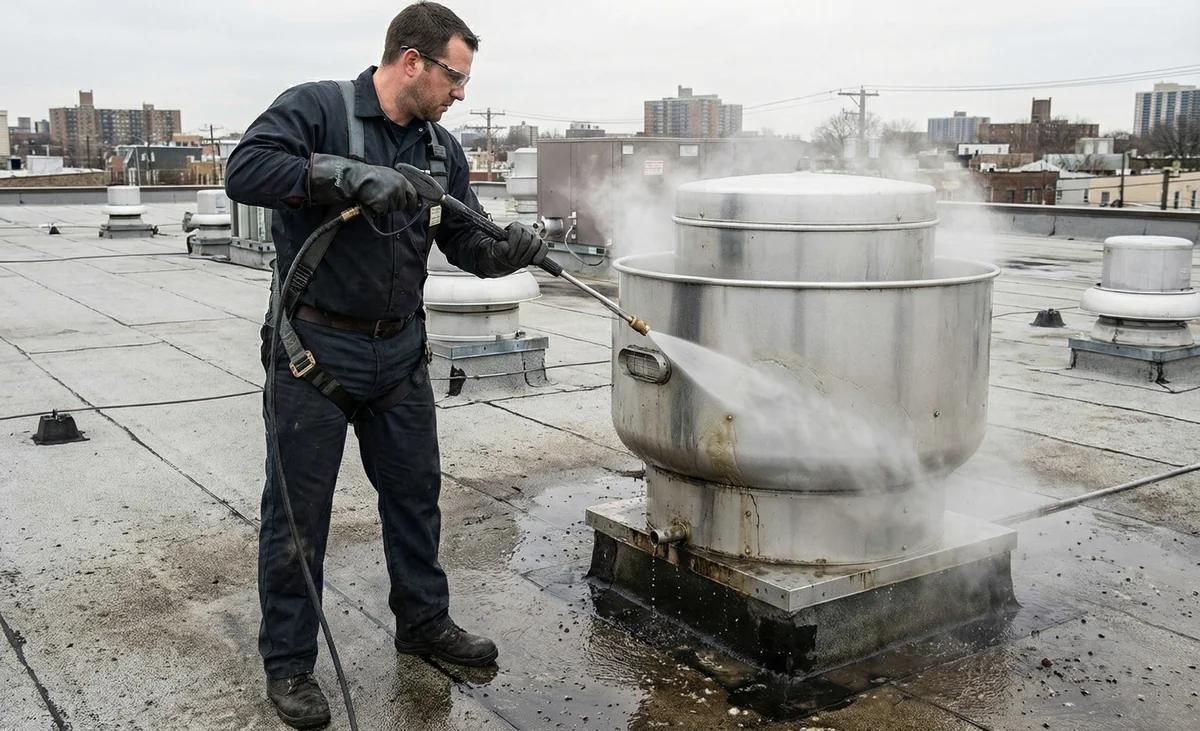
How Grease Builds Up Over Time: A Side-by-Side Look at Three Common Restaurant Types
Grease doesn't accumulate at the same rate in every kitchen — a side-by-side look at burger, wok, and taco restaurants shows why cleaning schedules should match how a kitchen actually cooks.
How Grease Accumulates
Every time food is cooked, tiny droplets of grease become airborne. Those vapors are pulled into the exhaust hood, travel through the ductwork, and eventually reach the rooftop fan. As the vapors cool, they condense onto the metal surfaces inside the system — over time, that thin film becomes a thick, sticky layer of combustible grease.
Most of this buildup is hidden from view. A hood can appear reasonably clean while significant deposits are accumulating deeper inside the ductwork or around the exhaust fan.
Restaurant Comparison
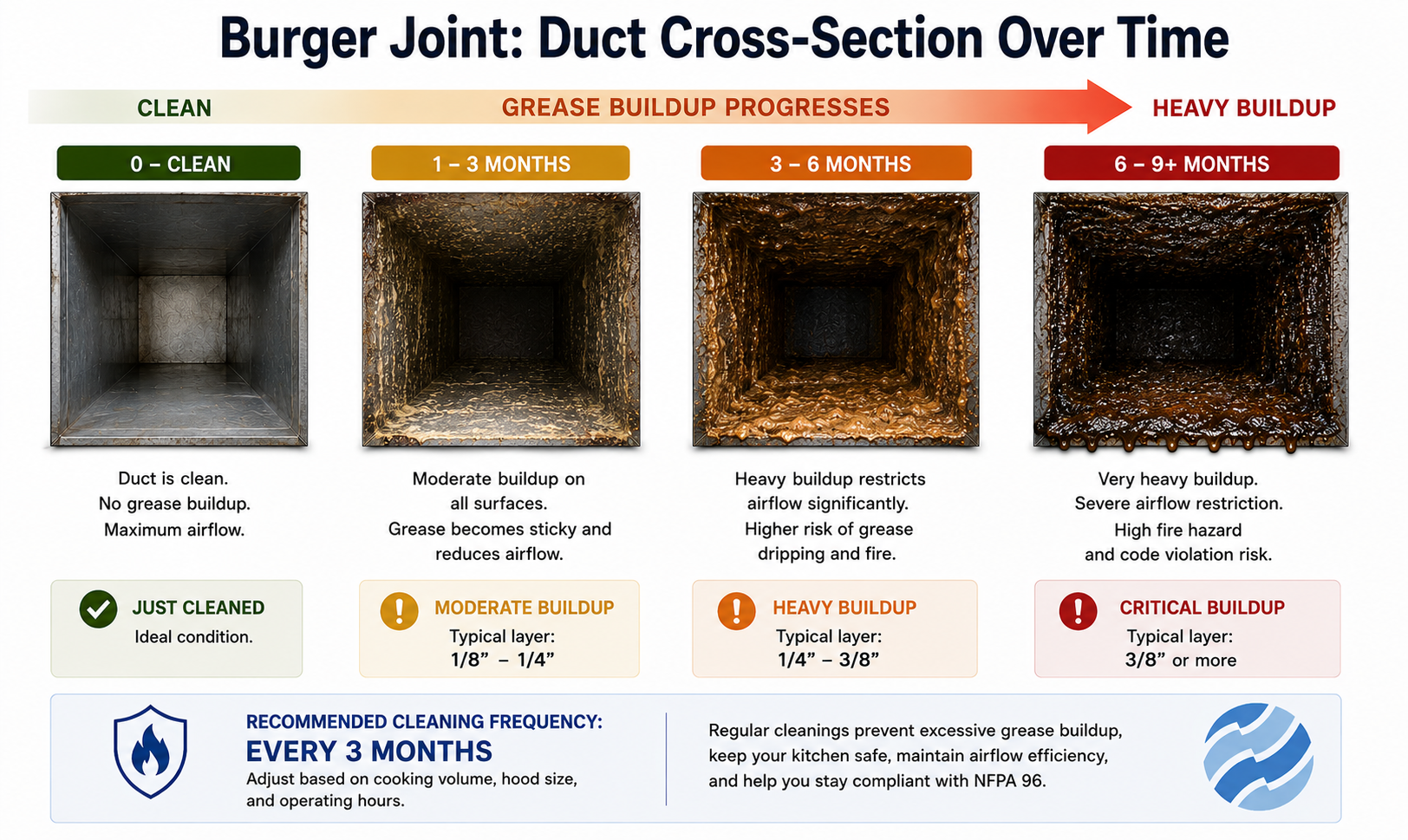
Burger Restaurants
Typical equipment
Flat tops, charbroilers, and deep fryers.
Grease profile
Moderate but steady — burgers and fries produce a consistent stream of grease-laden vapor that gradually coats the hood, horizontal ducts, and fan.
Typical recommendation
Quarterly cleaning for many operations. High-volume burger restaurants with extended hours may benefit from service every two months.
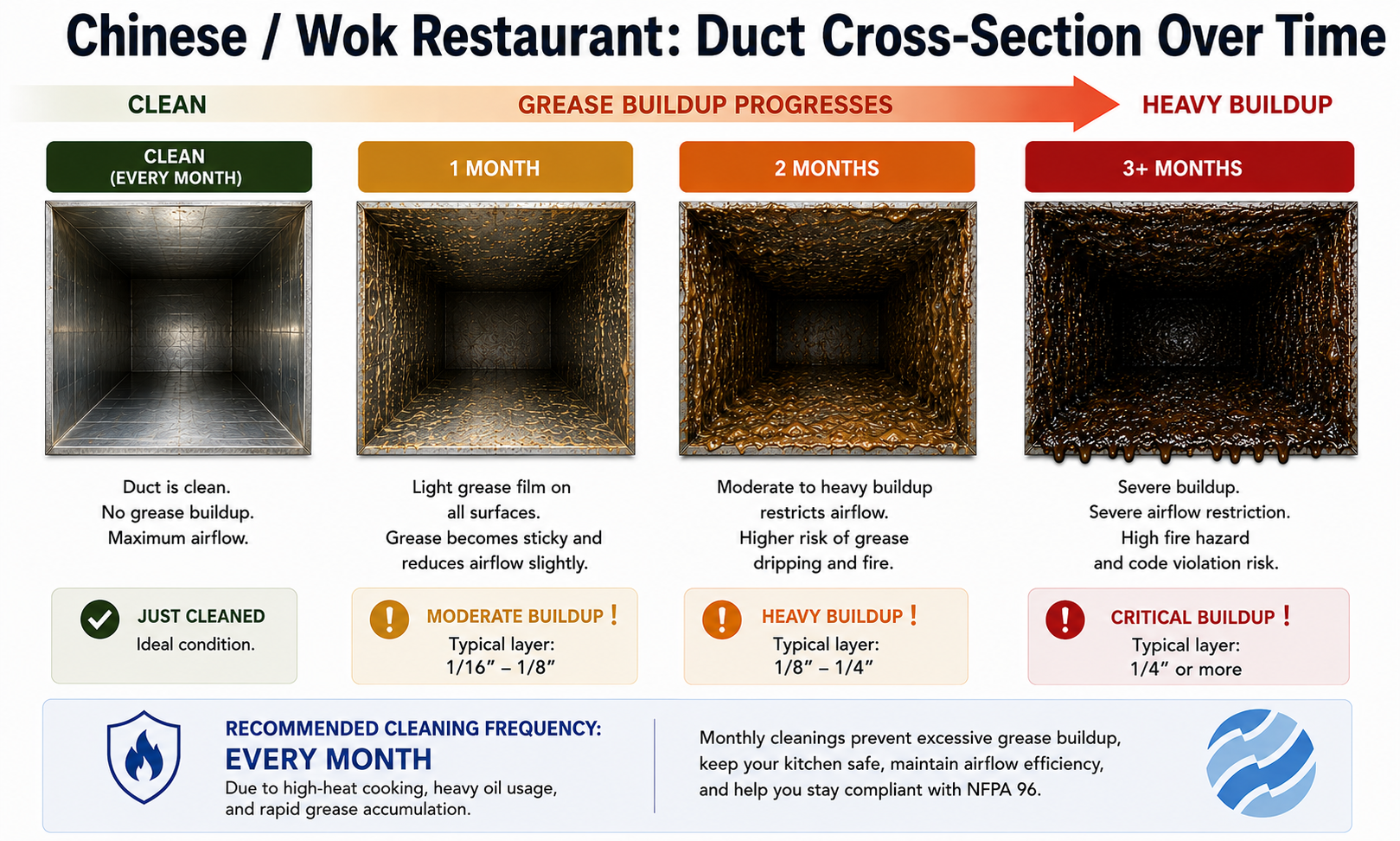
Chinese / Wok Restaurants
Typical equipment
High-BTU wok burners, fryers, and high-oil cooking.
Grease profile
Usually the fastest accumulation of the three — high cooking temperatures and large volumes of oil create heavy grease vapor that can quickly coat ductwork and rooftop fans.
Typical recommendation
Monthly cleaning for many high-volume wok kitchens. Lower-volume operations may be appropriate for quarterly service depending on actual cooking volume and inspection results.
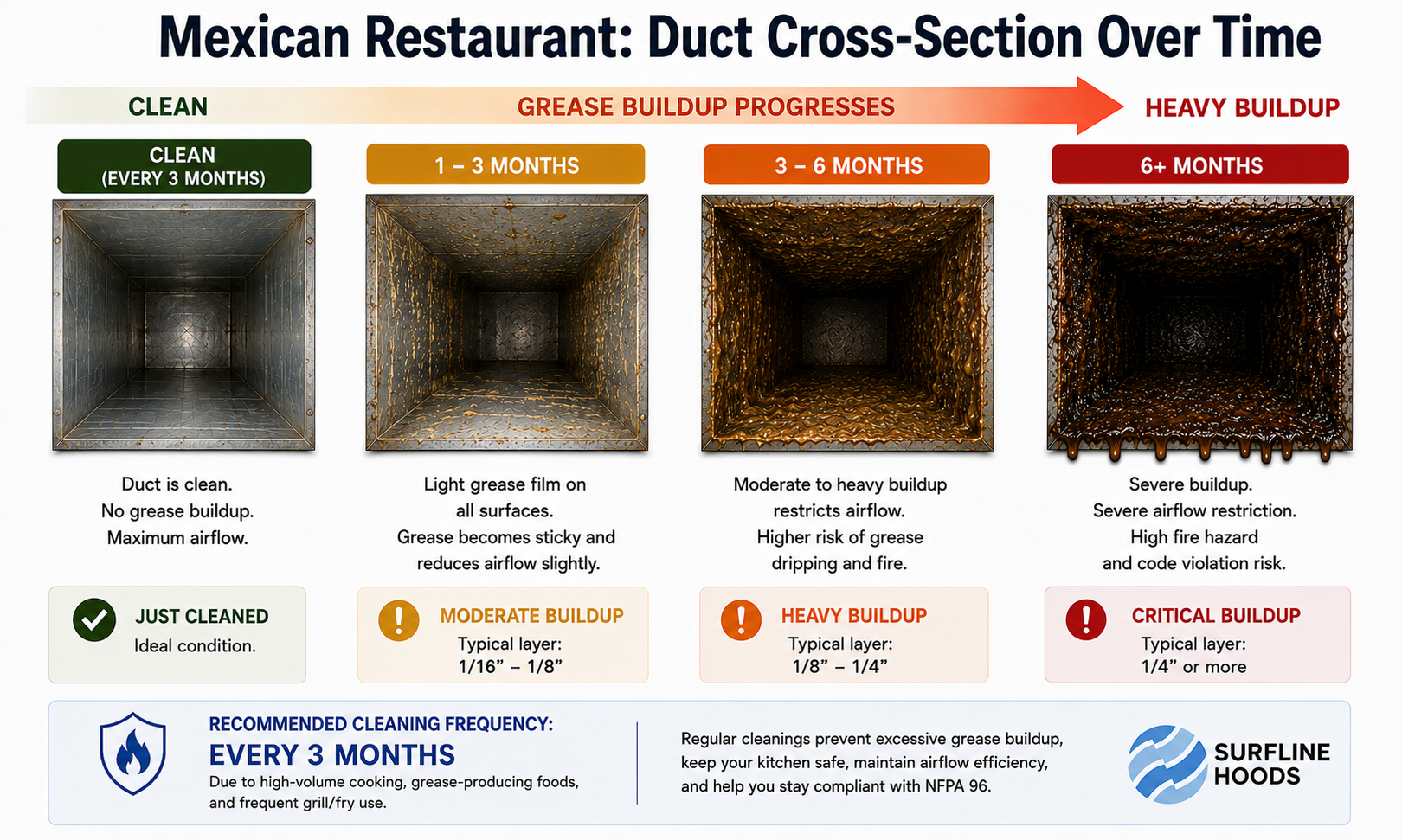
Mexican / Taco Restaurants
Typical equipment
Griddles, fryers, charbroilers, and tortilla preparation.
Grease profile
Generally between burger and wok kitchens — cooking meats, tortillas, and fried menu items creates steady grease accumulation, though typically not as rapidly as a busy wok operation.
Typical recommendation
Quarterly cleaning for many restaurants. More frequent service may be appropriate for high-volume locations or kitchens with extensive fryer use.
Why This Matters
Grease buildup is more than a housekeeping issue. Excessive deposits can:
- —Increase the risk of a fire spreading through the exhaust system.
- —Restrict airflow and reduce ventilation performance.
- —Increase smoke and heat in the kitchen.
- —Make future cleanings more difficult and expensive.
- —Create problems during inspections and with insurance claims after a fire.
A Note About Cleaning Frequency
No reputable contractor should promise that every restaurant of a particular type needs service on an identical schedule. Cleaning frequency should always consider menu, hours, cooking volume, equipment, local requirements, and the actual condition of the exhaust system. The recommendations above are practical starting points based on common operating patterns — not one-size-fits-all rules.
The Bottom Line
The question is not whether grease will accumulate — it will. The better question is how quickly your kitchen produces it and whether your current maintenance schedule keeps pace.
Restaurants that match their cleaning schedule to the way they actually cook typically enjoy cleaner systems, lower fire risk, better airflow, and fewer unpleasant surprises during inspections.
Related service
Kitchen Exhaust System Cleaning →